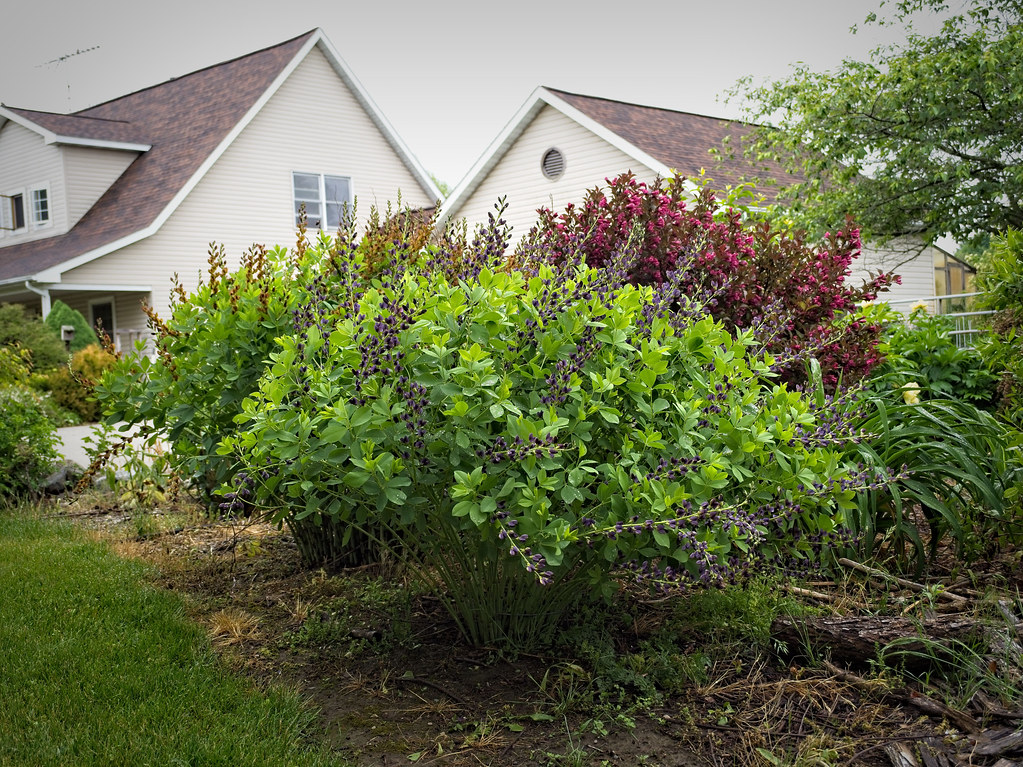
The trial beds at Bressingham occupy a half-acre block on the western edge of the gardens, behind a row of yew hedge that screens them from the public route. They are not on the visitor map.
Visitors who ask, politely, may be shown around by appointment. The visitor on this Tuesday in early June has an appointment, made by letter in March, with a member of the Bloom family who is the third generation to manage the trials.
His name is Adrian Bloom. He is the son of Adrian Bloom the younger, who is the son of Alan Bloom, who founded the Bressingham nursery in 1946 and over the following five decades introduced perhaps a quarter of the perennials now standard in British gardens.
The current Adrian Bloom is forty-six, was trained at Pershore College, and worked at the Royal Horticultural Society's trial grounds at Wisley for nine years before he came home in 2018 to run the family trials.
He apologises, as a matter of habit, for the modesty of the trial beds. They are not the show gardens. They are working ground. The labels are zinc tags written in pencil. The paths are bare earth. The plants are arranged for comparison rather than effect.
Currently in trial are forty-one cultivars of Heuchera, of which Bloom expects perhaps three to survive a second winter and one, if they are fortunate, to be worth offering commercially. The heucheras are part of an ongoing programme that the family has run since 1989 and that has produced, over its lifetime, eleven named introductions.
Also in trial: a block of fourteen Echinacea cultivars, mostly hybrids of the eastern American species, in a bed that was planted in autumn 2024 and is now in its second growing season. Bloom is critical of most of them.
The pink-flowered modern hybrids, he says, are bred for the first year's display and tend to die in their second or third winter. The trial is partly a service to garden centres, who continue to stock them, and partly a quiet reminder to himself that breeding for the catalogue photograph is not the same as breeding for the garden.
He prefers the species. A patch of Echinacea pallida, the pale purple coneflower, has been in the trial garden since 2007 and is now a clump six feet across. He has never moved it.
The grasses block is at the back of the trial garden. Bressingham was central to the introduction of ornamental grasses to British horticulture in the 1970s and 1980s, much of it through the work of Alan Bloom's son Adrian, who turned a sceptical British public toward miscanthus, deschampsia, and stipa over the course of perhaps fifteen years of patient demonstration.
The current trials include a recent introduction of Calamagrostis brachytricha from a Korean collection, a clump of which has been in the ground since 2022, and a small selection of Stipa gigantea seedlings raised from a particularly good clump in the public garden.
Bloom stops at the calamagrostis and bends down to feel the foliage. He has done this every time he has passed the plant since it was set, he says, and has learned to recognise the texture in his fingers. The new growth, in early June, is finer than that of the standard form and slightly bluer in colour.
Whether it will be worth introducing is, he says, a question for the next three years. The trial is not in a hurry.
Asked about the changing market for perennials, Bloom is direct. The garden-centre trade in the United Kingdom is in long-term decline. The independent nurseries that once bought from Bressingham wholesale are mostly gone. The mail-order business is the heart of the operation now, and the customers are older.
He does not despair of the trade. He notes that a new generation of growers, mostly in their thirties and forties, is buying perennials for naturalistic planting schemes influenced by the Dutch designer Piet Oudolf, with whom the Blooms have had a long professional friendship.
Oudolf last visited Bressingham in 2022. Bloom shows the visitor a small bed near the trial garden where Oudolf, on that visit, sketched out a planting scheme that the family executed the following spring. The scheme is now in its third year and has performed, in Bloom's assessment, exactly as the sketch predicted.
The trial garden's record-keeping is, by professional trial standards, modest. Bloom keeps a hardback notebook in which he writes monthly observations on each block in pencil. The notebooks go back to 1989. They are stored in a metal filing cabinet in a small office in the propagation barn.
Asked whether the notebooks have been digitised, Bloom shakes his head. He has been meaning to do it. He has been meaning to do it for some years.
The propagation barn is at the western edge of the property. It contains four polytunnels, a heated bench for cuttings, a small misting unit installed in 2019, and a single full-time propagator named Eddie Curtis, who has worked at Bressingham since 1994.
Curtis is sixty-three. He plans to retire in 2027. There is no apparent successor.
The visitor leaves the trial beds at one in the afternoon. Bloom walks her to her car. He mentions, as a closing observation, that the nursery business is harder than it was forty years ago, but that the work itself, the breeding and the trialling and the long observation of plants in the ground, is the same as it always was.
He returns to the trial garden after lunch, the visitor learns later, to take notes on a block of Salvia that flowered earlier than expected. The note, in pencil, runs to two sentences.