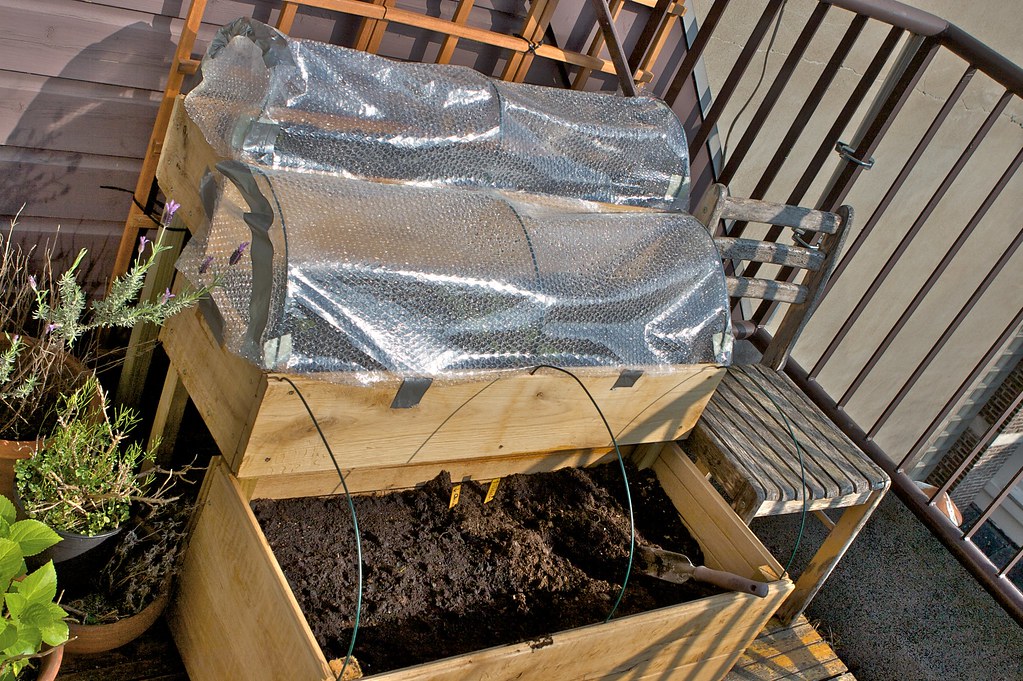
The polytunnel at the back of a narrow lot in Fushimi Ward, southern Kyoto, measures 24 feet long by 12 feet wide and rises to 8 feet at the ridge. It was erected in March of 2022 by a translator named Yui Tanabe and her partner, a chef named Daichi Tanabe, over a long weekend with the help of three friends and a borrowed step ladder.
It has, in the three years and one month since, never been empty of food. This is not a slogan. It is a fact established by Yui's monthly photographs, which Wintergreen has reviewed.
The polytunnel was bought from a Japanese agricultural supplier for ¥86,000, roughly $580 at the time, including hoops, ridge bar, doors at each end, and a single layer of UV-stabilised polyethylene rated to last seven years.
The Tanabes assembled it themselves on a base of pressure-treated softwood timbers staked at the corners. The polyethylene was stretched and clamped on a still afternoon with no wind. The doors, hinged from the ridge, swing up like awnings.
What is unusual about the Tanabes' polytunnel is not its specifications. It is the way they think about it. They do not call it a greenhouse. They call it the second kitchen. In conversation it is referred to with the same matter-of-fact tone Daichi uses for the refrigerator or the rice cooker.
The polytunnel runs on a four-season schedule keyed to the household menu. In winter (December through February) it holds mizuna, mibuna, komatsuna, spinach, two kinds of leeks, garlic chives, and a long row of daikon sown in October for January pulling.
In spring (March through May) the same beds carry early lettuce, snap peas, the first basil under cloches, and trays of seedling tomatoes, peppers, and aubergines being readied for the open garden.
In summer (June through August) it is given over to the heat-loving crops the Kyoto climate, hot and humid as it is, does not always reliably produce outdoors: full-size aubergines, sweet peppers, two kinds of basil, shiso, and a small block of okra Daichi uses for tempura.
In autumn (September through November) the summer crops finish and are succeeded by a second sowing of leafy greens, the next round of daikon, autumn turnips, and a flat of garlic that will overwinter for July harvest.
The rotation is, by Yui's accounting, not formally planned. It evolves from the kitchen. Daichi says in the morning what he wants for the week's menu. Yui walks to the polytunnel and adjusts the planting calendar. The crops shift accordingly.
This is the sense in which the polytunnel is an appliance. It is responsive. The household tells it what it needs and, given enough lead time (three weeks for greens, eight weeks for tomatoes), it produces the thing.
There is no heating. Kyoto winters drop occasionally to minus 3 Celsius and the polytunnel will hold at 1 or 2 on the coldest dawns. The greens tolerate this without complaint. The Tanabes have not lost a winter crop to cold in four years.
There is no automated ventilation. Both end doors are propped open by 7 a.m. on any day above 8 Celsius and closed before sundown. In the height of summer they remain open all night. The system is manual and reliable.
Watering is by a hand-held lance fed from a hose connected to a kitchen tap. Yui waters in the morning before her workday, which begins at her desk in the front room at 8:30 a.m. The watering takes about twelve minutes.
The soil inside is a double-dug bed amended once a year, in November, with a generous topdressing of leaf mould collected from the maple trees that line their street. The Tanabes have not added bagged fertiliser since 2023.
The polytunnel produces, in a typical year, an estimated 380 pounds of vegetables by the Tanabes' kitchen-scale weighing. This is not all of the household's vegetable consumption but it is, by Daichi's estimate, somewhere between 55 and 65 per cent.
The plastic cover is now in its fourth season. The supplier had rated it for seven. There is a small tear on the south side, patched with a strip of greenhouse repair tape, and a slight cloudiness at the ridge from UV exposure. The Tanabes expect to replace it in 2028.
The replacement cost will be roughly ¥18,000, around $120, plus an afternoon's labour. Spread across the polytunnel's seven-year life, this works out to an annual cost of about $17 for the cover, plus the original capital amortised at perhaps $80 per year.
Total annual cost of the polytunnel, including amortisation: under $100. Total annual yield: 380 pounds of vegetables of a quality Daichi would otherwise pay supermarket prices for. By his accounting, the structure paid for itself in its second year.
What does not appear in the accounting is the change in how the Tanabes eat. Daichi reports that the polytunnel has, more than any other single change, made vegetables the structural centre of their meals rather than a side dish.
The polytunnel is visible from the kitchen window. The Tanabes can see, while washing dishes, what is ready. The visual prompt is, both of them say, more powerful than any meal-planning app they have tried.
The polytunnel is not a glamorous structure. It is a curved arch of plastic on metal hoops in a back garden in southern Kyoto. It is the cheapest piece of agricultural infrastructure the household could have bought. It is also, by the Tanabes' lights, the most important domestic purchase they have made since the house itself.