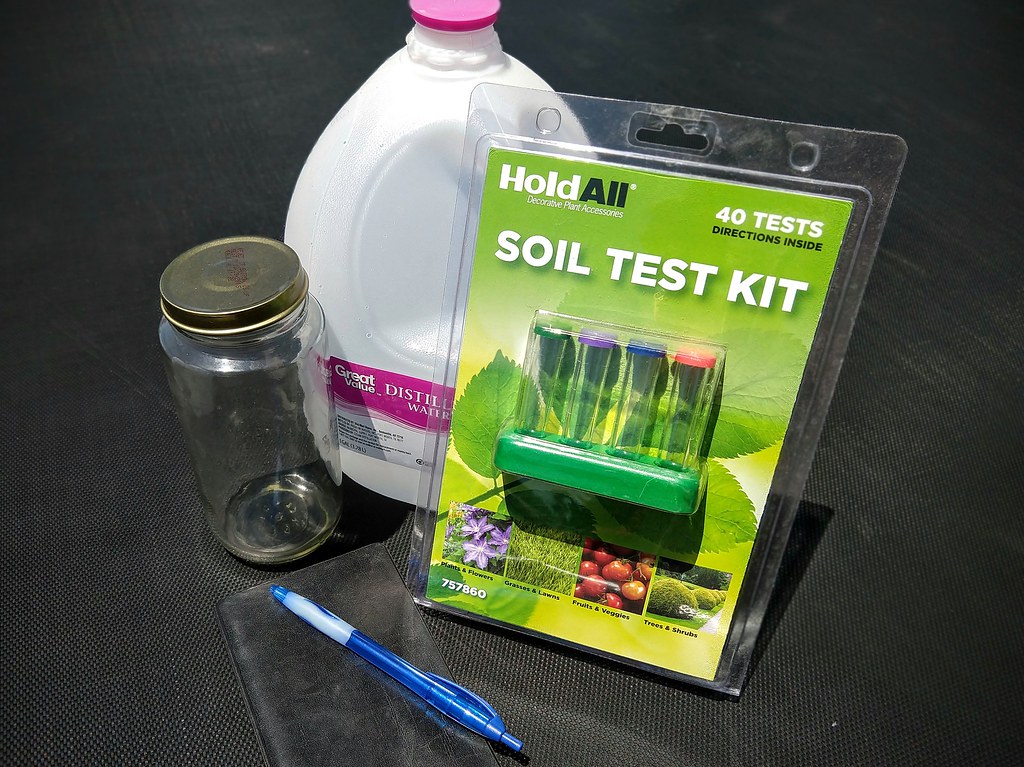
Octavia Bryne's garden in the Karori suburb of Wellington has been soil-tested four times in twelve years. Each test cost her, in 2026 dollars, between forty-five and seventy New Zealand dollars at the Hill Laboratories in Hamilton. The results have changed the way she gardens twice.
She recommends a three-year rhythm to most home gardeners she advises. Not annually, which is overkill for a garden of less than a quarter acre, and not the once-a-decade test that many gardeners default to, which gives no usable trend.
Three years is, she finds, the interval at which the chemistry of a home garden shifts enough to notice without shifting so much that the shift becomes alarming.
The first test she ever ran on her own garden was in April 2014. The pH came back at 5.8, lower than she had hoped, and the phosphorus was high. The high phosphorus surprised her until she remembered that the previous owner had been keen on bone meal for the roses.
She limed lightly that autumn, applying garden lime at the rate the soil report suggested, and stopped using any phosphorus-rich amendment in the beds. She added no other fertilizer that year.
The second test, in April 2017, showed the pH had come up to 6.3, the phosphorus had dropped to acceptable, and the potassium was now slightly low. She added a granite dust to the beds that autumn, sparingly, and continued.
The third test, in 2020, showed almost no change from the second. The soil was settling into a stable composition. She did nothing in response to that test except note the trend.
The fourth, in April 2023, showed the same. Her garden, by then, was on a maintenance footing.
She is due for a fifth this autumn, in 2026, and she will run it on schedule even though she expects no surprises.
What to test for is a question Bryne gets often. The basic panel from any reputable agricultural laboratory will give pH, organic matter, available phosphorus, exchangeable potassium, calcium, magnesium, and sodium. Some labs include cation exchange capacity, which is useful for understanding how the soil will hold nutrients over time.
She does not recommend the home gardener add the trace element panel as a routine. It costs more, and unless there is a specific symptom in the garden — yellowing between veins on tomatoes, for example, suggesting magnesium deficiency — the trace elements are unlikely to be the limiting factor.
How to take the sample matters more than most gardeners realize. Bryne uses a soil probe she bought from a Massey University extension shop in 2014, but a hand trowel will do. The principle is to take a small core from ten to fifteen places across the garden, six inches deep, mix them in a clean bucket, and submit a single composite sample of about a cupful.
She avoids sampling near the compost bays, near any place she has applied wood ash, and near the drip line of established shrubs. Those spots will give readings that are not representative of the working beds.
When the results come back, she reads them once, sets them aside for a week, and then reads them again. The week is to let her first reactions cool. Soil reports invite the gardener to act, and Bryne has come to believe that most of the actions a gardener takes in response to a soil test are too large.
The exception is pH. A pH outside the comfort zone of the crops being grown — below 6.0 or above 7.5 for most vegetables — should be addressed in the autumn, with lime to raise or sulfur to lower. Even here, Bryne recommends adjusting by no more than half a unit per year. Soil chemistry takes its time.
Phosphorus and potassium can be added in modest increments. Nitrogen, which the report will not give a reliable reading on, is best managed through compost, cover crops, and leguminous rotations rather than through a number on a page.
The trend across tests is more useful than any single test. A pH that has moved from 6.3 to 6.4 over three years is doing what a gardener wants it to do. A phosphorus level that has crept up from 25 to 60 mg/kg suggests an amendment habit that needs adjusting.
Bryne keeps her four soil reports in a manila folder in the kitchen drawer. She refers to them perhaps twice a year, usually when she is considering a new amendment, or when a crop has done unexpectedly badly and she is trying to rule out a soil cause.
A soil test, she will tell you, is a small piece of evidence. It is not the whole story of a garden, and it does not replace the eye of the gardener walking the beds in the morning. It is the document the eye consults when it is uncertain.
That, she thinks, is the use for it.