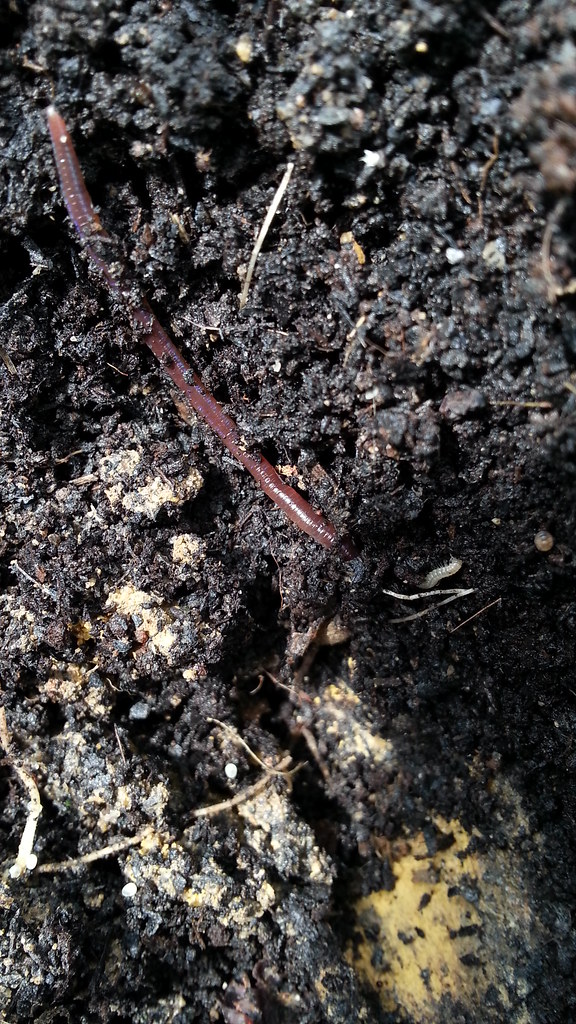
Octavia Bryne keeps a small notebook in the tool shed at her Karori garden. On the inside back cover is a column of numbers running from October 2014 to April 2026. Each number is a count of the earthworms she found in a single spade-deep forkful of soil from a specific spot in her north vegetable bed.
The first count, in October 2014, was three. The most recent, in April 2026, was eleven.
She does not present the trend as evidence of anything dramatic. The bed in question has been mulched, composted, and undisturbed for twelve years, and the rising worm count is what she would expect from a soil that has been treated kindly.
What interests her, and what she writes about here, is what the count means and what it does not.
Earthworms are useful bioindicators in temperate garden soils. Their presence in good numbers — eight or more in a spade-deep forkful — generally indicates a soil with adequate organic matter, reasonable moisture, near-neutral pH, and no significant chemical contamination.
Their absence, by contrast, can indicate several quite different problems. A dry soil. A compacted soil. A waterlogged soil. A soil that has been sterilized by fumigation or by heavy synthetic fertilization. A soil where the pH has dropped below 4.5 or risen above 8.0.
The same low count can have several different causes. The gardener who finds two worms in a forkful of soil cannot, from that fact alone, diagnose the problem.
What the worm count gives the gardener is a yes-or-no question about further investigation. A bed with eight or more worms is probably fine. A bed with two or fewer wants closer attention. A bed with no worms at all wants serious attention, beginning with a pH test and a probe for compaction.
Bryne counts twice a year, in April and October, at the same spot in each of her main beds. She marks the spots with small wooden stakes painted white.
She does the count in the morning, when the soil is moist but not saturated. She lifts a single spadeful, sets it on a plastic tray she keeps for the purpose, and counts as the worms move toward the edges.
She does not count anything smaller than about an inch and a half. The smaller worms, which may be juveniles of larger species or may be enchytraeids, are too easily missed and too easily double-counted.
The count goes into the notebook with the date, the bed, the recent weather, and any unusual observations. The notebook now contains twenty-four data points per bed over twelve years, which is enough to see trends and not enough to read too much into individual counts.
The trends in her garden have all been gentle. The worm counts in the beds she manages most carefully — heavy mulching, regular compost, no synthetic fertilizer — have risen by a worm or two per year over the long term. The counts in the bed she uses for the most demanding crops, where she sometimes scratches in a quick-release nitrogen amendment, have fluctuated more.
A gardener who does not want to keep a notebook can still use the worm count informally. The first time you lift a spadeful from a new bed, pay attention to what you find. If there are five or more worms, the soil is probably in working order. If there are none, ask why.
Bryne has had two gardens in her life. The Wellington garden she has counted in for twelve years. And a small allotment in Auckland she kept from 2002 to 2007, where the worm counts started at zero, climbed to four after three seasons of heavy mulching, and never reached the eight-worm threshold in the time she had the plot.
The Auckland soil, she now believes, had a deeper problem than mulching could solve. The site had been a builder's yard before the council subdivided it for allotments, and there was probably some contamination she never tested for.
She gave up the allotment when she moved south. The Wellington garden has been her teacher since.
The worm count is not the whole story of a soil. It is, like a soil test, a small piece of evidence. It is most useful when read alongside the gardener's other observations: how the crops are growing, how the soil drains after a rain, what the smell of a forkful is when you turn it in your hand.
Eleven worms in a forkful, on a Saturday morning in April, is a good piece of evidence. Bryne wrote the number down and went back to weeding.