On a quarter-acre lot in any North American suburb, the home seed saver shares pollinators with everyone within roughly a mile in any direction. This is the central problem of saving seed from cross-pollinated crops in a backyard.
The isolation-distance tables in the standard seed-saving manuals were written for breeders working on dedicated land. The Whealy table, the Navazio table, the Seed Savers Exchange charts, all assume a grower who can place a squash patch one mile from any other squash. The home saver cannot.
Sage Marchetti has been saving seed from her fifth-of-an-acre garden in Northampton, Massachusetts, since 2007. She has found that the recommended distances can be substantially reduced if the saver is willing to do a small amount of physical work and accept a slightly smaller seed harvest. The trade is almost always worthwhile.
The first and most important distinction is between self-pollinating and cross-pollinating crops. Tomatoes, beans, peppers, lettuces, and peas are predominantly self-pollinating. The flowers fertilize themselves before they open, and the seed produced is, in most years, true to type without any isolation effort at all.
There are exceptions. Potato-leaved tomato varieties have slightly more open flowers and will cross at perhaps three to five percent in a year with heavy bee activity. Hot peppers and sweet peppers in close proximity will cross at significant rates because bees do work pepper flowers. But for ordinary regular-leaved tomatoes and standard pole or bush beans, the home saver can plant two varieties three feet apart and save true seed from both.
The hard problems are in the cucurbits, the brassicas, the alliums, and the umbellifers. These are insect-pollinated, the flowers are showy and attractive, and the recommended isolation distances run from half a mile to two miles.
Cucurbits are the most-asked-about family in Marchetti's correspondence. The home saver who grows zucchini, summer squash, winter squash, pumpkins, and gourds is potentially mixing four different species and a dozen varieties in a single garden, with the neighbour's patch contributing whatever the neighbour grows.
The species matters. Cucurbita pepo includes most summer squash, zucchini, acorn, delicata, spaghetti squash, and small pumpkins. Cucurbita maxima includes Hubbard, buttercup, and the largest pumpkins. Cucurbita moschata includes butternut and the cheese pumpkins. The three species do not cross with each other in the field. A grower who plants one variety of each species can save seed from all three without any isolation effort.
Within a species, the problem returns. Two pepo varieties in the same garden will cross at high rates. The standard isolation distance is half a mile, which no one in a suburb has.
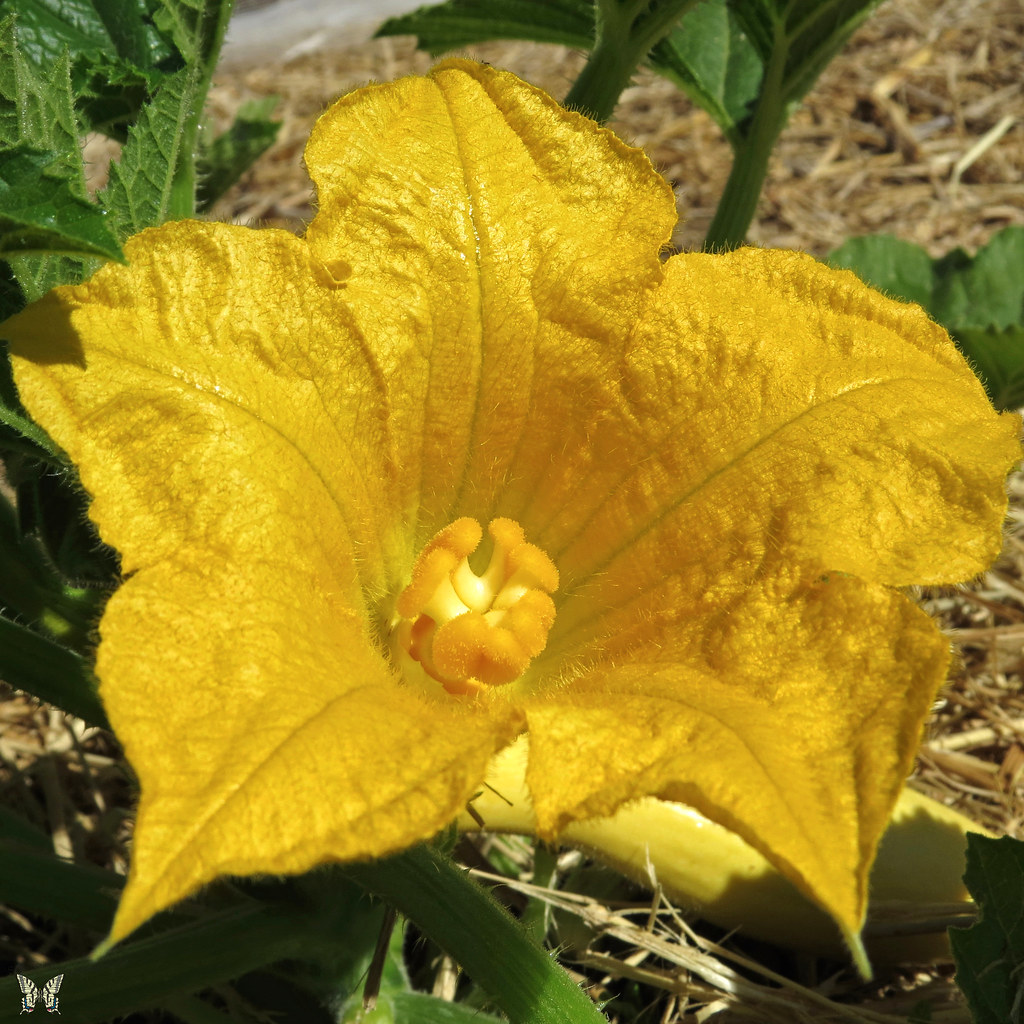
The home solution is hand pollination, which is slower to describe than to do. The evening before the female flower opens, Marchetti tapes the petal tips closed with a small piece of masking tape. She does the same to a few male flowers on the same variety. The next morning she removes a taped male flower, peels back its petals, removes the tape from the female, and dusts the female stigma with the male anther. She then re-tapes the female closed and ties a coloured string around its stem.
The female stays closed for the rest of its receptive period. The fruit that develops from that flower contains seed of known parentage. In a normal season she does eight to twelve hand pollinations per variety and harvests enough seed for several years.
Brassicas are harder. Cabbage, broccoli, cauliflower, kale, kohlrabi, Brussels sprouts, and turnip are all the same species, Brassica oleracea, and they cross promiscuously. The recommended isolation distance is a mile.
The home saver who wants to save brassica seed has three options. The first is to grow only one B. oleracea variety per year and rotate through them on a multi-year cycle. The second is caging: building a fine mesh tent over the plants of the chosen variety and introducing pollinators by hand, usually houseflies bought from a bait shop. The third is bagging individual plants and hand-pollinating.
Marchetti uses the cycle method. In 2024 she saved kale seed. In 2025 she saved broccoli seed. In 2026 she is saving Brussels sprouts seed. The cycle works because brassica seed remains viable for five to six years if properly stored.
Alliums are surprisingly cooperative. Onions and leeks are biennial, requiring two seasons to produce seed, and most home gardeners do not bother. Those who do can usually save reasonably true seed from a single variety with no neighbours within a few hundred feet, because alliums are pollinated primarily by sweat bees with short foraging ranges.
Umbellifers, the carrot and parsnip family, cross with their wild relatives, which is the real problem. Queen Anne's lace, which is wild carrot, is everywhere in the northeastern United States, and a carrot seed crop within a half-mile of a healthy stand of Queen Anne's lace will produce seed that grows fibrous white roots in the next generation. The home saver of carrot seed must either control Queen Anne's lace in the wider neighbourhood, which is unrealistic, or cage their carrot seed crop.
Marchetti has stopped saving carrot seed for this reason. The local Queen Anne's lace population is too dense, and the cage required is too large to manage in her garden.
The general principle the home saver should hold to: know which crops self-pollinate, know which species are which within a family, and accept that some crops are not worth saving seed from in a suburban setting. There is no shame in buying carrot seed every year and saving every other thing on the plot.
The seed-saver's notebook, in Marchetti's case, lists by year what she saved, what she bought, and what she let go. The list of what she saves has grown slowly over nineteen years. The list of what she has given up on is also informative.
Isolation, in the end, is less a number on a chart than a habit of attention. The grower who looks at the garden in early summer, identifies what will cross with what, and acts on it before flowering, will save honest seed. The grower who treats the chart as a law and gives up will save no seed at all.