Octavia Bryne went down on her left knee in a wet bed of allium seedlings in her Wellington garden on the morning of the eleventh of October 2024 and stood up again with a popping sensation in the joint that she has never quite forgotten. She was fifty-three at the time. She had been gardening, in some capacity, since she was a child in Christchurch, and she had been gardening seriously since 1997.
The popping was not, as her physiotherapist explained the following week, the end of the joint. It was the cartilage telling her, in the only language it knew, that the pressure of unsupported kneeling on damp soil had become more than it cared to bear. She was not, the physio added, alone in receiving this message in her early fifties.
Bryne has spent the eighteen months since that morning reading the literature on knee health in gardeners, talking to two physiotherapists and one orthopaedic surgeon, and methodically working through the small market of garden kneeling tools. She has not found a single best answer. She has found a set of useful ones, and a small number of clear mistakes to avoid.
The medical case is straightforward. Sustained pressure on the patella, especially against an uneven surface, compresses the cartilage layer between the patella and the femur. The cartilage has no direct blood supply and recovers slowly. Repeated compression over years produces wear, which produces pain, which produces the popping sensation Bryne now associates with her left knee on damp October mornings.
A cushion under the knee redistributes the pressure across a larger area, reduces peak compression, and gives the cartilage time to recover between sessions. This is not a controversial finding. It has been measured by sports medicine researchers in several countries since the 1980s.
What the literature does not address, because it is too small a question for clinical research, is which cushion. The garden centre aisle offers perhaps thirty options at any given time. They range from a five-dollar foam knee pad sold in a clamshell to an upholstered hardwood kneeler with steel handles that sells for over two hundred dollars.
Bryne worked through six of them over the 2025 season.
The five-dollar foam pad, generic, sold under perhaps six different brand names from the same factory in Guangdong, lasted six weeks before it compressed permanently to the thickness of a sandwich. By August it was offering no more cushioning than a folded newspaper.
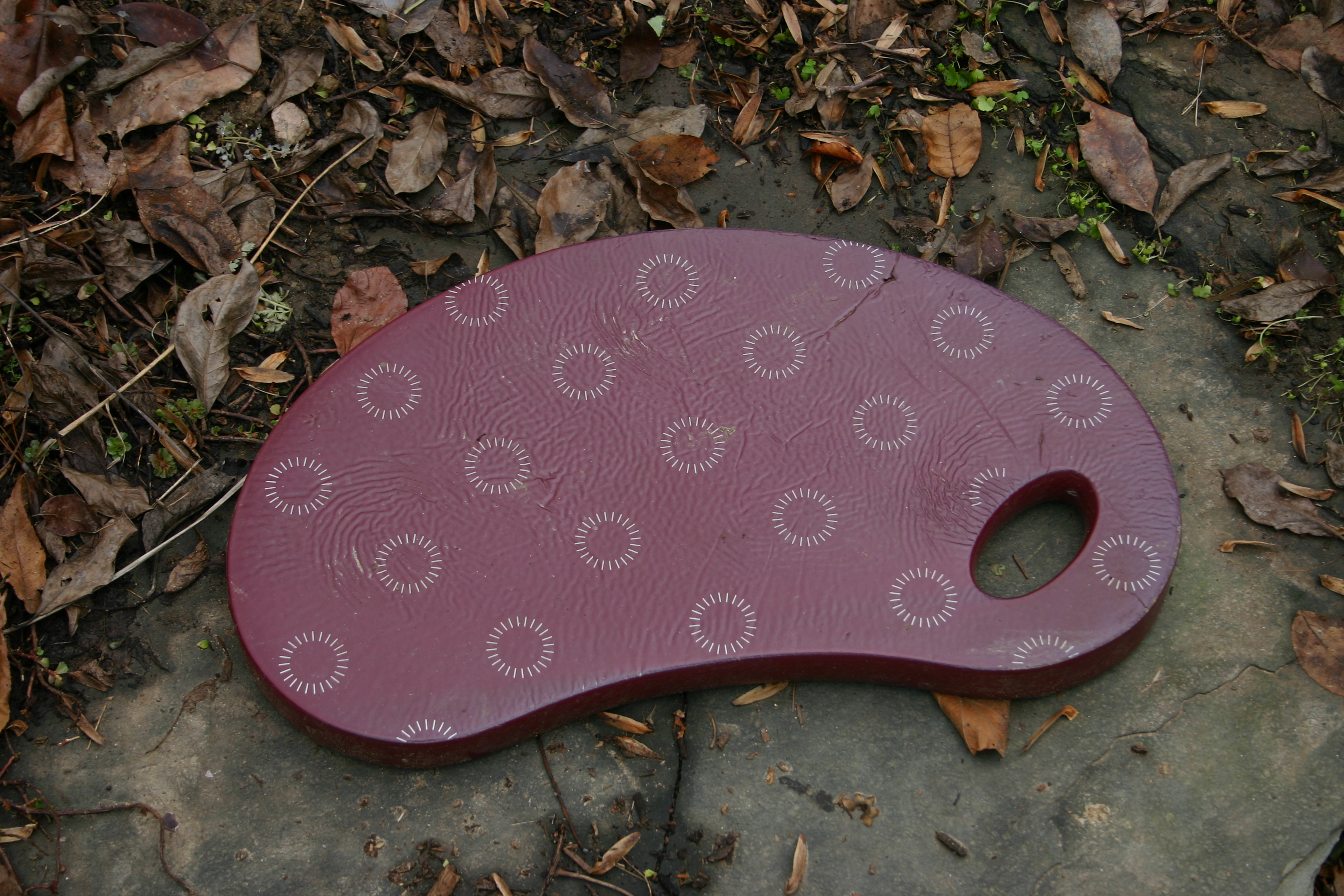
The Burgon and Ball kneeling pad, a 380-by-220-millimetre EVA-foam slab with a moulded handle, retailed at about $28 and lasted the whole season. By November it had compressed by perhaps thirty percent of its original thickness but was still functional. Bryne has bought a second for 2026 and expects it to last two seasons.
The Niwaki garden kneeler, a slightly more upmarket version of the same idea, retailed at $44 and showed almost no compression at the end of the season. The foam is denser. The size is slightly smaller, 360 by 200 millimetres, which Bryne found marginally less comfortable for her wider stance.
The Easi-Kneeler frame, a folding aluminium kneeling stool with an upholstered pad and two side handles, retailed at $98 and changed Bryne's life in a way that no other tool has. The frame allows the gardener to kneel and then to push back up to standing using the side handles, which removes most of the load on the knees during the rising motion. This was, the physiotherapist confirmed when Bryne brought one to her appointment in September, exactly the right thing to be doing.
The Easi-Kneeler has limitations. It is bulky to carry. It does not work in confined spaces between closely planted rows. It is awkward to use on a slope. It is, however, the right tool for any extended session of kneeling work on level ground.
The two heavier kneelers Bryne tried — a Haxnicks Garden Kneeler and a hardwood-and-steel object that arrived in a wooden crate from a manufacturer in Yorkshire — were both excellent tools that she stopped using within two months. The Haxnicks was simply too heavy to carry across the garden. The hardwood model was too heavy to lift at all. Both ended up in her shed, where they remain.
The lesson she draws from the tool trials is the same one she draws from every other comparison of garden tools she has ever made. The best tool is the one the gardener will actually carry to the work. Weight and convenience matter more than features. A simple pad that lives in the back pocket of the gardener's coat will get more use than an elaborate kneeling system that lives in the shed.
There is also a question of technique, separate from equipment. The orthopaedic surgeon Bryne consulted in February 2025 spent twenty minutes of her appointment teaching her how to kneel and rise without overloading the joints. The technique involves a brief half-squat, a controlled descent onto one knee at a time, and a rise that begins with a forward weight shift onto the front foot rather than a direct upward push from the knee.
Bryne practised the technique for about three weeks before it became automatic. The change in how her knees felt at the end of an October weeding session was immediate and noticeable. She suspects that the technique has done more for her knees than any of the cushions, though she would not be without the cushions.
She has also begun to plan her garden work differently. The high-kneeling tasks — weeding seedling rows, transplanting small plants, harvesting low crops — she now batches into shorter sessions of forty to fifty minutes, with a clear standing break between them. The breaks are not optional. She sets a small kitchen timer on a low wall by the vegetable beds.
The total time spent gardening in any given day is roughly the same as before. The distribution of the time has changed. There are fewer two-hour sessions on the knees. There are more forty-minute sessions, interspersed with standing tasks like tying in beans or watering the greenhouse.
She would not have said, before October 2024, that the question of the knees deserved a long piece in a gardening magazine. She had thought of it as a problem for older gardeners, in the abstract, who had not taken care of themselves earlier. She now thinks of it as a question for any gardener who intends to keep gardening into a sixth decade, which is to say, almost all of them.
On the morning of the seventh of June 2026 Bryne weeded a long row of leeks in her front bed, using the Easi-Kneeler frame and the Burgon and Ball pad on the seat of the frame for extra cushioning. She rose at the end of the row without difficulty, walked to the back of the garden to fill the watering can, and returned to weed the next row. The left knee did not pop.
She does not consider this a triumph. She considers it the small ordinary reward of having paid attention. The reward is, in her judgement, sufficient.