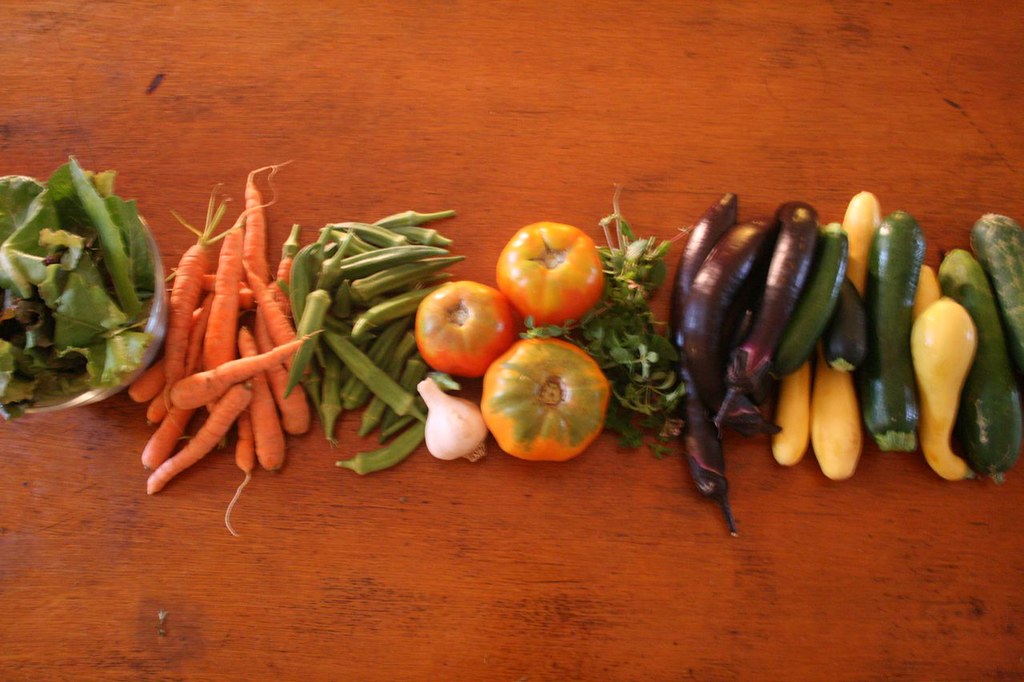
Eloise Vinter's quarter-acre garden behind the chapel in Wymondham has produced bad carrots for four out of the last six years. The carrots come up well, grow strongly through the summer, and on lifting in October show the long brown surface tunnels and rust-coloured staining that mean the carrot fly larvae have been at them since June.
In the spring of 2025 she put up the fence.
The carrot fly, Psila rosae, is a small, dark, slow-flying insect that does not normally rise more than about sixty centimetres above the ground. The adult female locates carrot plantings by smell, lays her eggs in the soil at the base of the row, and the larvae tunnel into the roots, where they feed through the rest of the season.
The classical defence is a barrier. The barrier has to be at least seventy centimetres tall, and ideally eighty or ninety, and it has to surround the carrot bed on all four sides. The fly will, if forced upward by a barrier, often abandon the attempt and look for an unprotected planting elsewhere. The flight behaviour is the key. The fly does not so much fail to clear the fence as decline to bother trying.
Vinter built her fence from twelve-millimetre softwood lath and a roll of fine insect mesh. The frame was eight feet by six feet, with the mesh stretched and stapled around all four sides, and four corner posts driven into the ground at the bed corners. The whole thing took an afternoon and cost, in materials, about thirty-two pounds.
She left the top open. The carrot fly's reluctance to fly upward makes a roof unnecessary, and an open top simplifies watering and weeding considerably.
The first carrot sowing went in on May 14th, three rows of Autumn King, spaced and thinned in the usual way. The bed was thinned a second time at the end of June. Vinter did the thinning in the late afternoon, when carrot fly activity is lowest, and she pulled the thinnings cleanly rather than disturbing them in place, because the smell of crushed carrot foliage is the main signal that brings adult flies to the bed.
This is the second piece of the carrot fly story, and it matters as much as the fence.
A carrot bed that is thinned, weeded, or otherwise disturbed in the early morning or evening, during the fly's main activity periods, will attract a substantial number of egg-laying females, no matter what barriers are in place. The same bed, worked at midday or in the late afternoon, will attract very few.
Vinter also reduced the number of thinning passes by sowing more thinly to begin with. The Autumn King seed in the May sowing was spaced at roughly one seed per centimetre, which produced a stand that needed only one significant thinning rather than the two or three she had previously used. Less thinning meant less foliage disturbance and less fly attraction.
The carrots came out of the bed in October. Vinter pulled the first row, washed the roots under the outside tap, and inspected them at the kitchen table. Twenty-six carrots in the first row. Two showed any visible surface tunneling, and on both the damage was superficial enough that the carrot was usable after a light peeling.
The remaining two rows produced similar results. Out of about ninety carrots harvested that autumn, fewer than ten showed any meaningful fly damage. The previous year, with no fence and ordinary thinning practices, the same bed had produced about a hundred and ten carrots of which more than seventy were unusable.
The improvement was an order of magnitude.
The fence has stayed up. It is in its second season this year, slightly weathered, with one corner that needed a new staple after a windy night in February, but otherwise sound. The mesh is fine enough to keep out the carrot fly and most other small flying insects, which means the bed is also functioning as an incidental protection against the diamondback moth and the cabbage root fly when Vinter rotates brassicas through it.
This is the small, unromantic, slightly ugly solution to a long-running garden problem. A wooden frame, a roll of mesh, and an adjustment to the time of day at which the gardener does her thinning. No biological controls, no spray, no exotic resistant cultivars.
Vinter writes mostly about tools, and a fence is in a sense a kind of tool. Its specifications matter — the height, the mesh size, the integrity of the seal at the bottom of each panel — and its use over a season is the part that the gardening books understate.
The carrots she lifted in October went into a wooden box of slightly damp sand in the shed, where they will keep through the winter. The first of them appeared in a parsnip and carrot soup at the chapel hall supper in the second week of November, where nobody noticed anything in particular about them, which is the result the fence was built to produce.