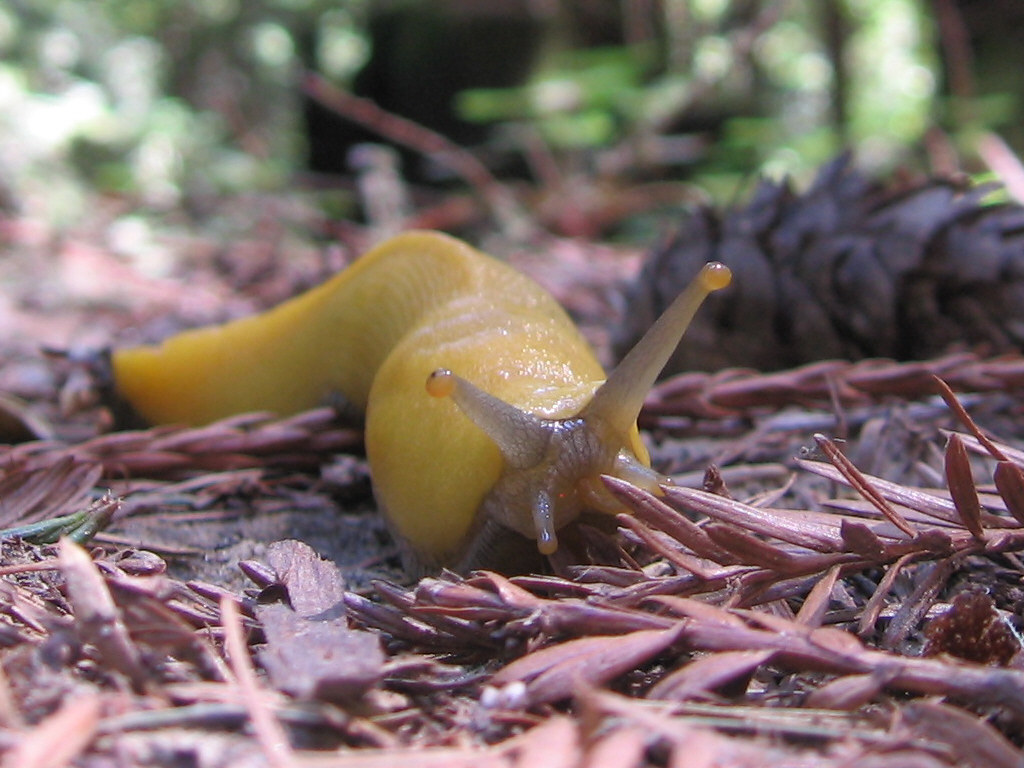
The first slug Octavia Bryne saw this autumn — autumn, in Wellington, beginning in late March — was on the underside of a hosta leaf in the small front garden of a friend in Khandallah. It was about forty millimetres long, a working specimen of Deroceras reticulatum, the grey field slug, which is the slug most gardeners are most often arguing with.
The friend wanted to know what to do. Bryne told her, gently, that she should begin by accepting that the slug lives here too.
This is the conversation Bryne has every year at about this time, and that she has been having professionally, in one form or another, for most of her career. The slug, in any garden in a temperate maritime climate, is not an invader. It is a resident. Its population on a given plot, on a wet October evening in Wellington or a damp June night in Devon, can run into the thousands. No amount of nightly hand-picking will materially reduce that number.
The first task of slug management is to abandon the goal of slug elimination.
What can be done is to reduce the damage that the slugs do to specific vulnerable plants at specific vulnerable moments. This is a much smaller and much more tractable problem.
The vulnerable moment is the transplant stage. A six-week-old lettuce seedling, set out into a damp bed on a Tuesday evening, can be completely consumed by slugs by Wednesday morning. The same lettuce, four weeks later, when it has eight or ten true leaves and a more lignified base, will be eaten cosmetically but will survive.
The window in which the plant is vulnerable is short. Most successful slug management is timed to that window.
Bryne's standard practice is to harden off lettuce, brassica, and bean transplants in the cold frame for ten days longer than the books recommend, until the lower leaves of the plants have begun to thicken. The extra ten days produce plants that, transplanted, can tolerate the first nights of slug attention without being destroyed.
She also waters in the morning, not the evening. The reasoning is identical to the reasoning for aphid management: slugs move at night, and a bed watered at five in the afternoon is wet at midnight, when the slugs are foraging. A bed watered at seven in the morning is mostly dry by midnight. The slugs still move, but they move less, and they prefer the damper neighbouring beds.
The neighbouring beds, in Bryne's case, are often the ones she does not particularly care about. There is a strip of self-seeded calendula along the side of the kitchen garden that she allows to thicken every spring precisely because it pulls slug pressure away from the lettuces. The calendula is undamaged, mostly, and the lettuces are eaten only at the edges.
This is the sacrificial-planting strategy, and it works in cool wet climates better than almost any other slug intervention Bryne has tested.
What does not work, in her experience: beer traps. They work briefly, kill a small absolute number of slugs, and have no measurable effect on damage to nearby plants. Copper tape works, on container plants, for one season. After one season the copper oxidises and stops conducting the small charge that deters slug crossing. The tape must be replaced or aggressively cleaned every year, which most gardeners do not do.
Crushed eggshell, coffee grounds, sharp sand, wood ash — all of these have been tested in proper trials. None of them produce a statistically significant reduction in slug damage. They make the gardener feel busy. They do not make the lettuce safer.
Slug pellets containing metaldehyde do work, very effectively, and are also implicated in the deaths of hedgehogs, song thrushes, and the gardener's own dog. Metaldehyde has been progressively restricted in most jurisdictions over the last decade, and Bryne does not use it.
Ferric phosphate pellets — sold in the UK as Sluggo, in New Zealand as Quash — do work, are less toxic to non-target species, and are the only chemical intervention Bryne occasionally uses on a small targeted basis around freshly transplanted brassicas in particularly wet weeks. A small ring of pellets around the base of each transplant, applied once at planting and replenished after heavy rain, is enough.
Nematode treatments work too, particularly Phasmarhabditis hermaphrodita, which is a parasitic nematode that attacks slugs specifically. The treatment is moderately expensive, requires soil temperatures above five degrees Celsius, and lasts about six weeks. For a small kitchen garden in the four critical weeks of spring transplanting, it is a reasonable option.
The most useful thing Bryne does, however, is none of these. It is the simple act of walking the garden at ten in the evening, on a wet night, with a torch and a jar, for the first three weeks after spring transplanting. A twenty-minute walk produces between forty and a hundred slugs. Three weeks of this, conducted regularly, will reduce the resident population in the transplant beds enough to give the seedlings the time they need to toughen up.
The jar she takes to the compost heap. She does not crush, salt, or otherwise dramatize the killing. She does not pretend she has solved the slug problem either.
By mid-November the seedlings are no longer seedlings, the slugs have moved on to the calendula and the rough grass, and the evening walks stop. The kitchen garden runs through summer with a tolerable level of slug damage and a reliable harvest.
The friend in Khandallah, this past March, listened to all of this and then said she just wanted to know how to get rid of them.
Bryne told her the truth: she couldn't, and the sooner she stopped trying to, the better her garden would be. They had tea, and the slug on the hosta leaf was still there when she left.
Filed under