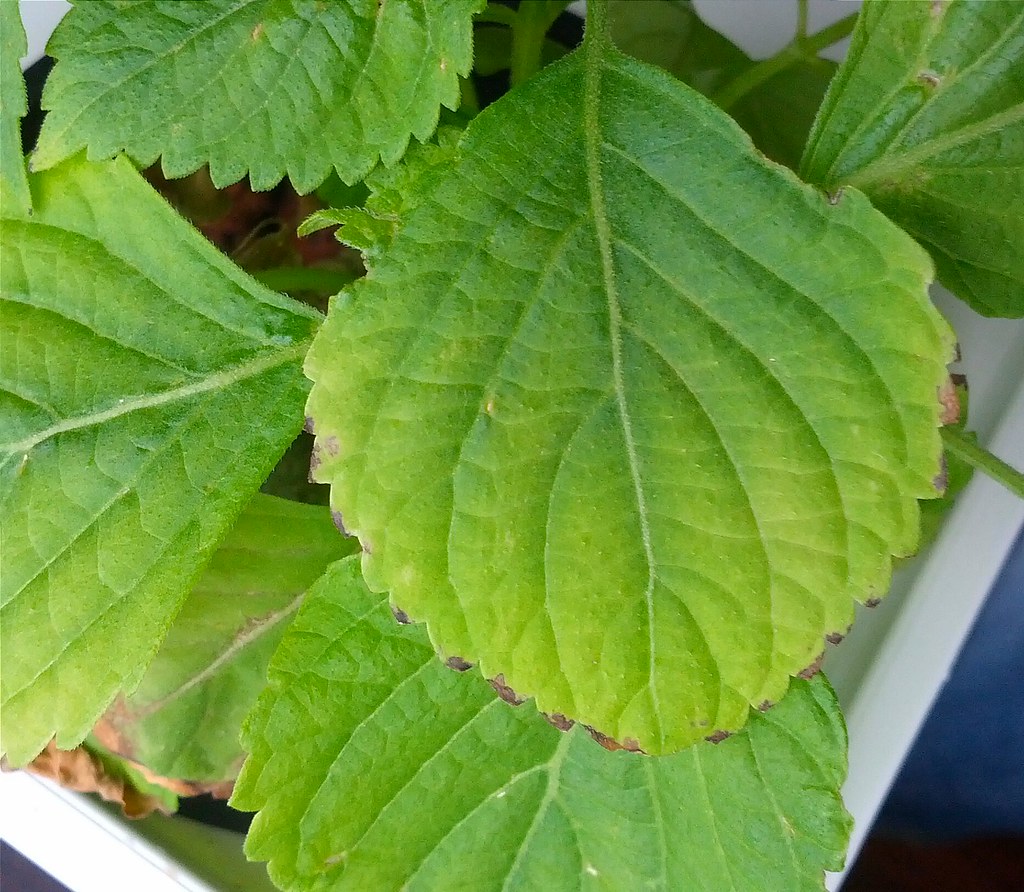
The lean-to greenhouse on the south wall of Hadley Ferguson's house in Brattleboro, Vermont, is sixteen feet long, eight feet deep, and unheated. From late March through November it is a working space. From December through February it goes effectively dormant. In May, when Ferguson is starting most of her summer crops, it is also where the shiso lives.
Shiso, Perilla frutescens, is a warm-season annual in the mint family native to East Asia and ubiquitous in Japanese and Korean cooking. In the open ground in Vermont it will grow, but only just. The growing season is too short, the nights are too cold, and the plant rarely reaches the size it needs to be productive before the first frost ends it in late September.
In the greenhouse it thrives. The protected environment adds about six weeks at the front of the season and three weeks at the back, and a plant that would manage perhaps eighteen inches in the open ground reaches three feet in the greenhouse and produces leaves continuously from June through October.
Ferguson grows four kinds. Green shiso, the standard Japanese aojiso, with broad green leaves and a clean, slightly cumin-edged flavor. Red shiso, akajiso, with deep purple leaves used for coloring umeboshi and for shiso furikake. Bicolor shiso, with leaves that are green above and purple beneath, used as a garnish. And a Korean cultivar of Perilla frutescens var. crispa, sometimes sold as 'kkaennip', with larger, flatter, more cup-shaped leaves used for wrapping grilled meats.
The four are botanically the same species and will cross-pollinate freely. Ferguson, who saves seed, isolates the cultivars by growing only one at a time to seed each year, on a four-year rotation. The other three she grows but harvests for leaves only, removing flower spikes before they set seed.
The seed is the first problem. Shiso seed has a relatively short viable life and germinates poorly when it is more than two years old. Ferguson buys fresh seed every other year from a Japanese seed company and supplements with her own saved seed for the cultivar in rotation that year.
The seed also benefits from a brief cold stratification. Ferguson refrigerates the seed packets for two to three weeks before sowing, which she finds increases germination from about forty percent to about seventy percent.
She starts seed in mid-April in small cell trays on a heat mat in the greenhouse. The mat keeps the soil at seventy-five degrees Fahrenheit, which shiso requires. At lower temperatures germination is slow and erratic. The seedlings emerge in seven to ten days and produce their first true leaves at three weeks.
The transplant goes into the greenhouse bed in mid-May, when the danger of hard frost is past in the protected environment. Ferguson sets the plants twelve inches apart, which is closer than most guides recommend but works in the rich greenhouse soil. The shiso bed runs along the back wall of the greenhouse, four feet wide and twelve feet long, and holds about thirty-five plants in a typical year.
The soil is a working market-garden soil, deep, well-drained, and high in organic matter, that Ferguson built over a decade by adding three inches of compost each spring and rotating cover crops in winter. The pH is around 6.5, slightly acid, which suits shiso well.
Through the season the plants want consistent moisture, regular harvest, and protection from the greenhouse's worst summer heat. Ferguson runs drip irrigation on a timer that delivers about a gallon per plant per week in June, scaling up to two gallons in the hottest weeks of July. She shades the greenhouse from late June through August with a fifty-percent shade cloth thrown over the roof, which keeps the interior temperature below ninety-five degrees Fahrenheit on the worst days.
Without the shade cloth, the plants bolt to flower in early July and the leaf production collapses. With it, they continue producing usable leaves until late September.
The harvest begins in mid-June with the first thinnings, when the plants are about twelve inches tall and Ferguson removes the lower leaves to use in the kitchen. By July she is harvesting weekly, taking the top three leaf pairs from each plant. This pinching encourages branching and delays flowering by a week or two.
The yield from a single plant over a season is substantial. Ferguson estimates each mature shiso produces about two hundred usable leaves between June and October, which is enough for a household that uses shiso regularly.
The kitchen uses are extensive. Ferguson wraps small pieces of seared fish in shiso leaves and serves them as ohitashi. She makes a shiso pesto using green shiso, pine nuts, garlic, sesame oil, and a small amount of miso. She layers shiso leaves with cucumber in a quick refrigerator pickle that is the household's standard summer side dish. The red shiso goes into umeboshi when the local plums are available in late July.
The Korean leaves go into kkaennip kimchi, in which the leaves are layered with a soy and chili paste and fermented for several days. The result is intensely flavored, pungent in a way the green leaves are not, and Ferguson keeps a jar of it in the refrigerator from August through November.
In late September Ferguson allows the cultivar in rotation that year to flower, watches the seed heads develop through October, and harvests the seed when it is dry and brittle on the plant, usually in early November. The seed is cleaned by hand, stored in glass jars, and labeled with the cultivar and year.
She also dries leaves through the season for winter use, though dried shiso is, in her honest assessment, a poor shadow of the fresh leaf. The texture is gone, the volatile aromatics are mostly lost, and only a faint version of the cumin-anise note survives. She uses dried shiso primarily in furikake and in a small quantity of winter soups, and accepts that the real shiso season is June through October.
The greenhouse, by November, is mostly empty. The shiso bed has been cleared, the soil has been amended with two inches of compost and sown with a winter rye cover crop, and the plants Ferguson took as cuttings have rooted in small pots for the next year's mother plants.
There is one small experiment Ferguson is running this year. She has potted two shiso plants into eight-inch pots and brought them inside to a south kitchen window for the winter, on the theory that shiso can be coaxed through a New England winter as a houseplant. Her honest expectation is that they will limp through January and die in February. Her hope is that one of them will produce enough leaves in March to start a kitchen-window crop a full month before the greenhouse can take seed.
She will, she says, report back.
Filed under