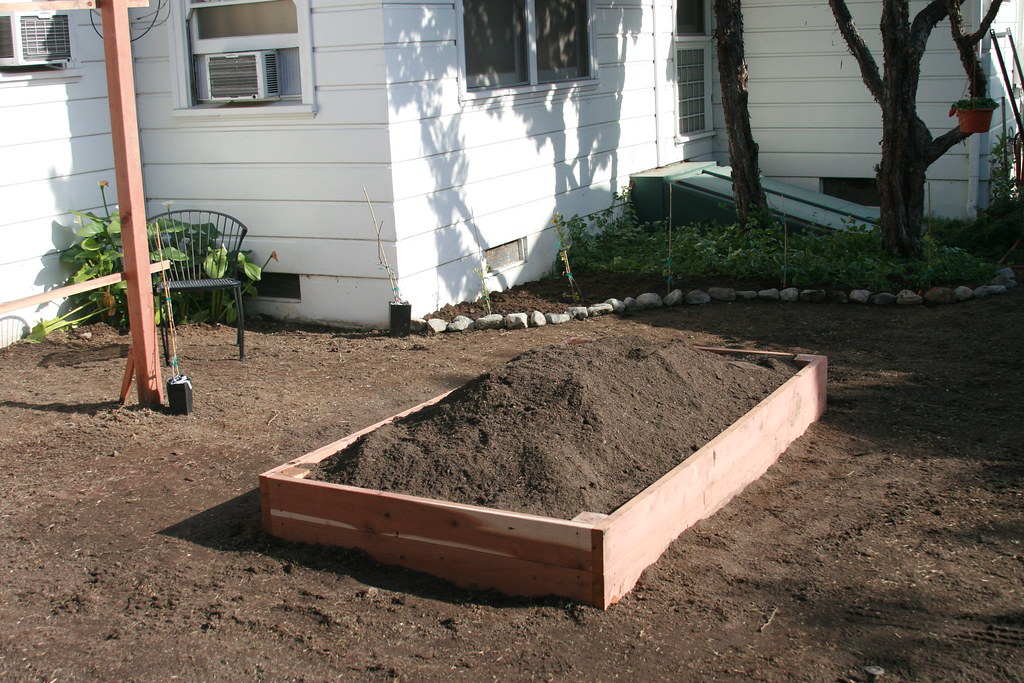
The bed measures twelve feet by sixteen, set behind a low fieldstone wall in Egremont, Massachusetts, on land that has grown food in some form since 1843. Janet Pellerin, who keeps it now, took possession of the house in March 2019 and has worked the same rectangle every season since.
She drew the layout that first spring on the back of a feed-store receipt. Six raised rows running north to south, eighteen inches apart, with a narrow path of crushed bluestone down the middle. The plan has not changed.
What has changed is everything inside it.
Pellerin gardens in USDA zone 6a, which in practice means a last frost somewhere between May 8 and May 22, and a first hard frost in the second week of October. She does not push these dates. She has tried, in three different years, and lost each gamble.
On April 14, 2026, the soil temperature at four inches was forty-six degrees Fahrenheit. She read it with a cheap probe thermometer from the hardware store in Great Barrington and noted it in a black composition book she has kept since 2019.
The notebook is not romantic. It records dates, varieties, weather, and what failed. Pellerin says the failures are what she rereads.
On April 18 she direct-sowed three feet of Tokyo Bekana mustard, two feet of Hakurei turnips, and a single row of Tom Thumb butterhead lettuce. The bekana came up in nine days. The turnips needed thirteen.
Peas went in the same week against a length of welded-wire fencing she bought in 2020 and has not replaced. She grows Sugar Ann, which is short enough that she does not need to retie the vines as they climb. She picked the first pods on June 7.
By May 15 the bed held five different crops and the bones of a sixth. Pellerin transplanted tomato seedlings on May 24, a week later than her neighbor Carl Whitmore, who lost his to a frost on May 26 and had to start again from the cell pack at Ward's Nursery.
She grows four tomato varieties in a 12-by-16 bed, which most extension agents would call excessive. Cherokee Purple, Sungold, Black Krim, and a paste tomato called Speckled Roman that she saves seed from each year. They occupy a single row, four feet on center, staked individually.
The summer of 2026 ran hot. The Berkshire Eagle reported a stretch of nine consecutive days above eighty-eight degrees from July 8 through July 16. Pellerin mulched heavily with shredded leaves left from the previous autumn and watered at six in the morning, never in the evening.
She lost one tomato plant, the Black Krim, to blossom-end rot in late July. The others held.
Succession is the discipline that distinguishes the small bed from the small disappointment. Pellerin sows a four-foot row of bush beans every twelve days from May 28 to July 20. By the time the first sowing finishes producing in mid-August, the third sowing has begun.
She uses two bean varieties, Provider for early plantings and Maxibel for the heat of midsummer. The Maxibel, a French filet type, holds its tenderness longer in heat. This was a discovery from 2022 that she has not revised.
The bed is not without ornament. A row of Empress of India nasturtiums runs along the south edge each year, both for the table and to draw aphids away from the brassicas. Pellerin reads them as a sacrifice she is comfortable with.
Carrots, three varieties, are sown in August for autumn harvest. She has settled on Napoli, Mokum, and a small purple called Cosmic Purple that her granddaughter prefers. They come out of the ground in late October, sweeter for the frost.
Garlic goes in on October 18, planted on the date her mother used in Lenox in the 1970s. Pellerin separates the cloves the night before, sitting at the kitchen table with a cup of black tea, while the dog watches from the chair.
She uses two hardneck varieties, Music and German Extra-Hardy, both saved from the previous year's harvest. She has not bought seed garlic since 2020.
The bed sleeps under a heavy mulch of straw from a farm in Sheffield from late November until early April. Pellerin pulls it back in stages as the soil warms, transferring it to the compost heap behind the shed where it spends another year breaking down.
What the bed produces, in a typical year, is roughly two hundred and twenty pounds of food. She has weighed it twice, in 2021 and 2023, and stopped because the weighing felt like the wrong measure.
The right measure, Pellerin says, is whether the bed feels finished by November. In 2026 it did, with the garlic in, the last carrots pulled, and the notebook filled to its last lined page.